Enjoy 15% OFF on your very first order at Top Gear
Get 10% OFF on all your orders with Top Gear
Enjoy 15% OFF on your very first order at Top Gear
Get 10% OFF on all your orders with Top Gear

Comfort upgrades
Take a closer look at the GLE 350’s fold-out rear-seat tray, passenger clearance and illuminated seat-back details.
The rear seat has its own brief. Passengers need somewhere to put small items, enough room to move, and a cabin that still feels considered when accessories are folded away. In Top Gear’s Mercedes-Benz GLE 350 Reel, the camera puts those needs in context. It moves from the exterior and front trim to the rear bench, an illuminated seat-back arrangement, and a fold-out tray demonstrated with a laptop and a phone.
Ask the people who use the back seat what they usually do there. Someone who spends time parked between appointments may want a small surface for an occasional laptop. Passengers on long drives may want a convenient place for a phone and personal items. For a family, it might be more important that equipment stows quickly and leaves as much space as possible for stepping in and out.
The Reel shows the tray open with a person sitting behind the front seat. That angle gives you a better reference for reach and placement than an isolated photo of an accessory. Look at the space between the tray edge and the passenger’s knees. Look too at where the seat in front has been set. Available clearance can change when someone adjusts the front seat. A satisfactory installation should be assessed in the seating positions that will actually be used.
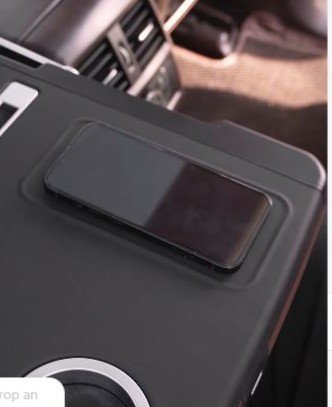
The sequence includes a laptop demonstration and a close shot of a phone on the surface. Use those as examples of the layout shown. If you want a tray for a specific object, bring it or share its measurements with the installer. Ask them to demonstrate that configuration and explain the accessory’s safe use, mounting requirements and specified limits. Follow the product and vehicle guidance for stowing accessories and securing items before travel.
Pay equal attention to the folded position. From behind the front seats the Reel shows a paired arrangement, with dark panels, matching trim and illuminated accents. A pair can make the rear cabin look more symmetrical, while a single fitting may suit a vehicle used mostly by one rear passenger. Look for whether the parked and folded positions work with legroom and everyday access. Discuss the fit of the chosen equipment around the vehicle’s seat mechanisms and restraint components before you specify it.
The illuminated band appears as a narrow detail rather than a whole new colour on the seats. That helps separate the darker accessory surfaces from the warm upholstery. The camera also cuts to door controls, the headrest and the rear bench. These views show why the seat-back colour should be checked next to the door trim, upper cabin and original controls. Surfaces that look unrelated on a mood board can feel coordinated when their warm and cool tones are balanced in the car.
If you are comparing lighting options, ask to see them with other cabin lights switched on and in a darker demonstration. Decide where the accent should be seen from and how much control you want over it. The footage is a good reference for visual scale. Confirm actual settings, fitment and functionality for the exact hardware offered with your vehicle.
A rear cabin plan should make room for the original daily functions. Tell the specialist who normally sits there and which front-seat settings matter. Identify child-seat requirements, fold-down access, rear air outlets and charging needs where relevant. A quick look at where the car is normally parked can also make a difference. An accessory that feels easy to open with both doors wide at a workshop should still make sense when you are loading passengers in a narrower space.
The strongest lesson in the GLE 350 video is how the different views work together. The wide rear bench shot establishes the palette. The tray sequence shows a real passenger position. The phone and lighting close-ups reveal the details worth asking about. Save the shots that match the way you use your car, then ask Top Gear about your model and rear-seat configuration. Explore Top Gear’s car seat trays for other options to discuss.
No account yet?
Create an Account