Enjoy 15% OFF on your very first order at Top Gear
Get 10% OFF on all your orders with Top Gear
Enjoy 15% OFF on your very first order at Top Gear
Get 10% OFF on all your orders with Top Gear

Craft & design
Learn what to assess before recovering a worn car seat, through an Oscar-design refit in Swiss Coffee.
A seat that has lost its shape asks a different question from one that has simply lost its colour. In this FNF Auto Retail and Top Gear Reel, the brief included restoring a damaged seat and its internal support before fitting an Oscar-design cover in Swiss Coffee. The finished brown-and-dark cabin is the most visible part of the result. The work underneath is what makes the story worth a closer look.
Before choosing a finish, describe what has changed in the way you sit. Perhaps the outer bolster feels soft where you step over it every day. Perhaps one side sits lower, or you notice a ridge when you slide into position. A photo helps an upholstery specialist see the surface. A description of when you notice the problem helps them decide what to inspect beneath it.
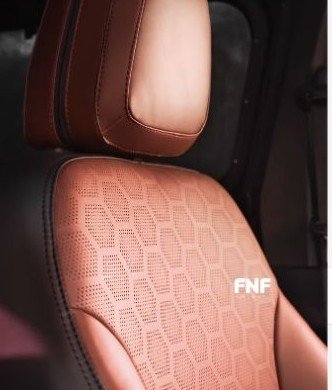
Visible wear is easy to mistake for the whole job. The surface can look tired while the seat still supports you evenly. The reverse is also possible. In the Reel, the team discusses the seat and its restoration from the cabin, then shows the upholstered result. FNF describes work on the internal support as part of this particular project. Ask for an assessment first so your own estimate reflects the work your seat needs.
Separate the consultation into what affects comfort, what affects the appearance, and what might require a vehicle technician. A tired covering or a flattened section of cushion calls for a different conversation from a seat that moves on its rails, a backrest that will not lock, or a warning light. Those issues need diagnosis before you commit to cosmetic work. The same applies to seat controls, belt hardware and anything connected to a restraint system.
Ask the fitter to explain which components will be inspected and which are included in the quote. A useful estimate names the affected seat and area. It also tells you what might change once the old cover comes off. That lets you compare the cost of the proposed restoration with a suitable replacement while both are still options. A clean finish can be judged from the doorway. The seat still has to work when you adjust it, climb in or spend an hour on the road.
The reveal shows a warm centre panel framed by much darker side material. On the closer shots, the embossed pattern reads differently on the backrest than on a smaller sample. The difference in tone helps define the seat against the dark roof and cabin trim. Meanwhile, the dual-tone steering-wheel finish carries a small amount of the warm colour to the driver's side without turning the whole dashboard into a single colour block.
Bring a photograph of your door cards and dashboard if you are comparing tones. Check a sample near the window in daylight and again in shade. Notice the visual transition from the bolster to the original trim, especially at the door opening where you see both surfaces at once. The way Swiss Coffee appears in a short video depends on cabin light, camera angle and screen settings. Use the Reel to judge the overall treatment and the physical sample to choose the colour.
Sit in your normal driving position. Then repeat the actions you do with the seat every day: adjust its position, reach the belt and get in and out at your usual angle. Look at the sides and seams after the seat has moved. If there are rear access releases or armrests, ask the fitter to demonstrate those too. Compare the left and right profiles where they are meant to match, and ask which care products are appropriate for the fitted material.
The last shots of the Reel give you a useful way to look at a completed project. The wide angle shows the relationship between wheel, seats and trim. The close view tells you what the stitching, surface texture and seating panels look like on their own. Take both views of your own car when discussing a restoration. Start with the seat that needs attention, then decide how much of the cabin should change with it.
If your seat is damaged rather than simply worn, tell Top Gear what has changed and share your vehicle details. For the visual reference, watch the original Reel for the sequence from the initial cabin discussion to the close-ups of the finished Oscar design.
No account yet?
Create an Account